
Frequently Asked Questions
Can I do a short sale if my loan is a VA loan?
Yes. A VA loan can be short sold, but your servicer (and often the Department of Veterans Affairs) must approve it, and sometimes the VA has a role depending on how the loss is handled.
Does the VA have to approve the short sale too, or just the lender?
Usually the servicer is the primary decision-maker while following guidelines set forth by the investor (in the case of a VA loan, the Department of Veterans Affairs is the investor). The VA may become involved depending on the case, especially when deficiency/claim issues come into play.
Do VA short sales take longer than a normal short sale?
Not in our experience, the VA is clear in their approval guidelines and the pace of the approval is driven by the servicer not by the VA. The biggest time driver is almost always how complete the package is and how quickly valuations/conditions are resolved.
What if I’m current right now—will the lender/VA still consider it?
According to VA Guidelines, you do not have to be delinquent on your mortgage to qualify for a short sale. It is possible the lender may suggest something different, however that is not a VA Guideline. You still need a documented hardship and numbers that show the home can’t sell for enough to pay off the loan.
What if I already have a foreclosure notice or sale date—can we still do a VA short sale in time?
Sometimes, yes—but it’s a time-sensitive situation. The key is getting a complete package + a strong offer submitted quickly and pushing for a postponement when possible.
If I used my VA entitlement on this home, what happens to my entitlement if I short sell?
It depends on the final outcome of the loan claim/repayment situation and your VA history. Many people can use VA again, but available entitlement and timing can vary.
Will the VA pursue me for the deficiency?
It depends. Some short sales end with a clean release; others can result in a remaining balance/claim issue depending on the approval terms and how the loss is handled. The borrower can always negotiate a full release with the lender during the process. The North Carolina Real Estate Commission does not allow real estate agents, who are not attorneys, to negotiate with banks on behalf of the borrower.
Is there a way to get a full release so I’m not held responsible later?
That’s the goal. The important part is making sure the approval letter clearly states the terms, including whether there’s a deficiency waiver/release, before you close.
If I’m approved, does that mean I’m 100% done financially—or can there be a “VA debt” afterward?
Approval to sell short does not automatically guarantee there’s no remaining obligation. What matters is the final written terms of the approval and how the lender/VA handles the shortfall.
How does a short sale affect my ability to use VA benefits again?
In most cases you can use VA again, but it depends on entitlement availability, your credit re-establishment, and the final loss outcome.
Can my entitlement be restored after a short sale? If so, how and when?
Sometimes. Restoration generally depends on whether the VA was paid back, whether the loan was settled cleanly, and your specific entitlement history.
Will I still be able to buy with VA again—and what might the waiting period look like?
Often yes. Some borrowers can qualify sooner than they expect if the rest of the file is strong, but it varies by lender overlays, credit, and payment history leading up to the short sale.
Who is the final decision-maker: my servicer, the investor, or the VA?
Typically the investor (for VA loans, the Department of Veterans Affairs) controls the guidelines for approval. The VA may be involved depending on the scenario, but most of the day-to-day approval process runs through the servicer using the investor guidelines.
What’s a VA “compromise sale” and how is it different from other short sales?
It’s essentially VA’s term for a short sale where the payoff is less than what’s owed. Practically, it means the deal may have specific VA-related documentation and review requirements.
What documents does VA typically require in addition to the lender package?
Most of what you submit is still the “standard” short sale package (authorization, hardship, financials). Depending on the servicer, there may be VA-specific forms, explanations, or added verification.
What’s the most common reason VA short sales get delayed or denied?
Incomplete/expired documents, unclear hardship, unresolved title/lien issues, unrealistic pricing, valuation disputes, and offers with too many concessions or uncertain financing.
Can you talk directly to my lender/VA rep for me?
Yes, once you sign a third-party authorization, your agent can communicate directly with the servicer to submit docs, request updates, and understand terms. As previously mentioned, the North Carolina Real Estate Commission does not allow real estate agents, who are not attorneys, to negotiate with the bank on the seller’s behalf. The Seller can hire their own attorney or negotiator to work with the bank on terms and deficiency judgments.
Will I have to bring cash to closing on a VA short sale?
Often no, but it depends on approval terms, lien negotiations, and whether a contribution is required.
Can the lender/VA require a promissory note or cash contribution?
Sometimes, however, our experience is this is rare. Some approvals include a contribution, note, or other settlement term, especially if there are assets or factors the servicer weighs heavily.
Who pays closing costs and commissions…will they be capped or limited?
Typically the lender approves specific costs as part of the net sheet. In some cases, commissions/fees are negotiated or limited by investor guidelines.
Can the buyer ask for closing costs, and will the lender/VA allow it?
The Buyer can ask for concessions, it will be up to the lender to approve. The main focus of the bank is to achieve their approved net number. As long as the bank receives the approval amount, the bank tends to approve reasonable and customary closing costs for the buyer.
Are there limits on seller credits or concessions in a VA-related short sale?
Concessions are often scrutinized in short sales because they can reduce net proceeds. The lender/investor will usually approve or deny them based on the net sheet and market norms.
How does a VA short sale hit my credit compared to a foreclosure?
Our philosophy is anything is better than a tanked credit score and a foreclosure, especially for our young military sellers. In most cases, foreclosure is usually more damaging and longer-lasting than a short sale, but the exact impact depends on your payment history leading up to the sale and how the account is reported.
How soon could I qualify for another VA loan after closing?
It depends on the lender, your credit rebuild, and the overall file. Some lenders require seasoning; others focus more on re-established credit and compensating factors.
What will VA underwriting look for next time—late payments, collections, re-established credit, reserves?
Most underwriters look at: the cause of hardship, the pattern of late payments, whether you re-established on-time payments afterward, debt-to-income, and overall stability. Reserves and clean credit since the event help.
Will I need a letter of explanation for the short sale when I buy again?
Almost always, yes. A short, factual explanation plus available documentation is typically required.
I have PCS orders—can we do this fast enough to avoid foreclosure?
In most cases, yes. The earlier you start, the more options you have: pricing, buyer selection, foreclosure postponement requests. If there’s a foreclosure sale date, speed and a complete package are critical.
I’m deployed/out of state, how can I sign documents and handle the process remotely?
Most of the process can be handled remotely with e-sign where allowed, overnight mail, and remote notary options depending on the documents and county requirements. Some documents from the lender will require a physical signature, typically the hardship letter and any IRS documents require a physical signature.
What if the home is a rental now because of orders? Does that change approval?
It can affect how hardship is explained and how the lender evaluates finances, but it doesn’t automatically prevent a short sale. Clear documentation is key.
What if I have HOA dues, judgments, or other liens? Will the VA allow them to be paid?
These items usually must be addressed on the settlement statement. Whether they’re paid in full, reduced, or negotiated depends on lien type, priority, and what the lender approves.
What if I owe property taxes? Does that have to be brought current?
Property taxes usually have to be handled at closing because they can be a priority lien. Title will identify what must be paid and what can be prorated/settled.
Do I have to live in the home for VA reasons, or can it be vacant?
For the short sale itself, vacancy doesn’t automatically disqualify you, but occupancy can affect property condition, showings, and timelines. The bigger issue is keeping the home secure and preventing deterioration.
Do I have to be out before closing?
You should plan to be out by closing unless there’s a specific arrangement approved by all parties.
Can I stay after closing with a rent-back?
Rent-backs can be complicated in distressed sales because lenders and buyers may not allow them. Sometimes a short “post-occupancy” agreement is possible, but you should assume move-out by closing unless explicitly approved.
Should we accept the highest offer or the “cleanest” offer?
Often the “cleanest” wins: solid financing, minimal contingencies, realistic closing timeline, and fewer concessions. A slightly lower but cleaner offer can be more likely to reach closing. The North Carolina Short Sale Addendum will be provided to you for review which states all offers will be presented to the servicer and the servicer can decide which offer they would like to proceed with.
Does VA/lender prefer cash, conventional, or VA buyers for short sales?
Lenders usually prefer whatever is most likely to close with the fewest issues. If the home has condition problems, cash or conventional can reduce repair/appraisal hurdles.
How long will the servicer take to respond once we submit the offer?
It varies widely. Response time depends on package completeness, valuation timing, negotiation needs, and lien complexity. Expect “weeks,” not “days,” in many cases.
What can we do to prevent the buyer from walking during the waiting period?
Set expectations up front, choose patient buyers, keep documents current, respond fast to requests, and use a strong communication cadence. Also, avoid accepting offers with unrealistic closing deadlines.
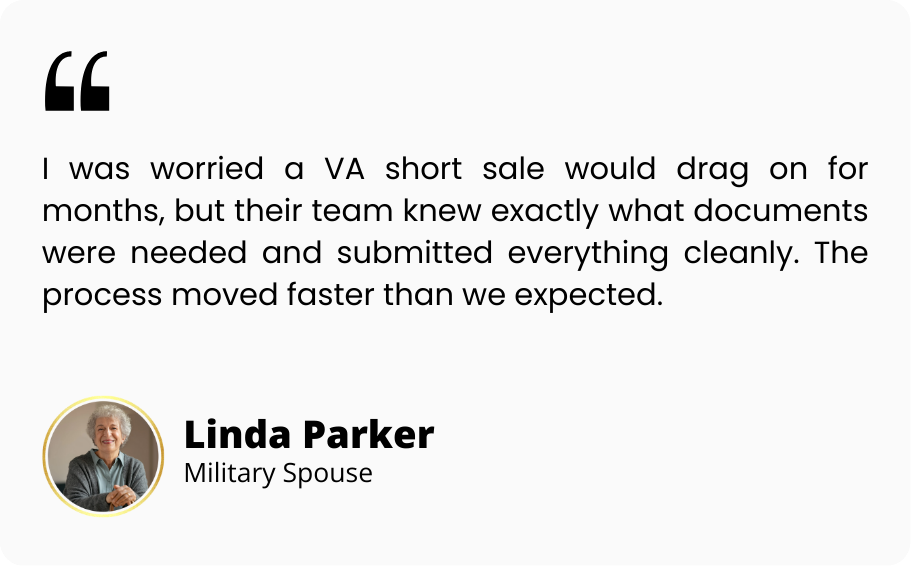
Real Stories From Families
Who Found Their Way Forward
This seller contacted us when they received orders to go to the drill field. They contacted us very early in the process and we were able to get them listed, under contact, short sale approval, and closed without them ever missing a mortgage payment. Their due diligence in contacting us early was one of the smartest decisions these sellers make in the listing process.
Life took an unexpected turn for this seller when he was discharged from the service. We were able to keep the home from going into foreclosure with a buzzer beater closing just before the New Year, and just before the short sale approval expired. The house was sold to a new family who brought it back to it's original glory!
The seller contacted us after he completed his loss mitigation package with his bank. He needed someone to get him an offer quickly to continue the short sale process. The day of listing we were able to secure an all cash investor offer for him and we got short sale approval in 22 days. This house remains our record for the fastest days from offer to approval.
This family contacted us after having their house as a rental for a while with another property management company. The condition of the home was poor and the sellers were in need of a short sale and an investor buyer due to condition. We were able to quickly get an offer from one of our trusted investors who was willing to go through the short sale process with us and get them closed quickly to avoid excessive damage to the seller's credit.
Life took an unexpected turn for this seller when he was discharged from the service. We were able to keep the home from going into foreclosure with a buzzer beater closing just before the New Year, and just before the short sale approval expired. The house was sold to a new family who brought it back to it's original glory!




Request a Consultation Now
We specialize in short sales and foreclosure avoidance when timelines are tight and mistakes are costly. Our team has handled hundreds of VA short sale and foreclosure transactions and understands lender-driven processes. We help homeowners facing PCS orders, medical hardships, and sudden market shifts move forward with a clear plan and confidence.
We specialize in short sales and foreclosure avoidance when timelines are tight and mistakes are costly. Our team has handled hundreds of VA short sale and foreclosure transactions and understands lender-driven processes. We help homeowners facing PCS orders, medical hardships, and sudden market shifts move forward with a clear plan and confidence.
(910) 939-4905
Jacksonville, NC 28546
Get updates on VA short sales and resources
Navigation
Resources
© 2026 Anchor & Co Real Estate | Brokered by eXp Realty - All Rights Reserved.